
Schedule Your Consultation
Speak directly with a CTA-qualified expat tax specialist.
✓ 10+ years experience
✓ CIOT examiner
✓ Award-winning CTA specialist

Working remotely across borders raises real questions about UK tax residence and where you owe tax. We help you stay compliant and avoid unexpected bills, wherever in the world you're working from.
This decides which of your income UK tax applies to.
Working from a laptop abroad doesn't automatically make you non-resident. Your UK tax residence is determined by the Statutory Residence Test - how many days you spend in the UK, whether you keep a home here, and where your family live all matter, alongside where you actually carry out your work. We work through the test for your circumstances and, if the answer isn't clear-cut, a UK tax residence assessment gives you a written conclusion to keep on file.
Some nomad income, and remote work carried out in the UK, can create obligations.
You may need to register for UK Self Assessment if you're UK tax resident, or if you have UK taxable income even while you're overseas - including work carried out while physically in the UK, UK client income, UK rental income or UK investment income. We map out what's reportable, check whether a double tax treaty affects the position, and apply double taxation relief where it helps, so you aren't taxed twice on the same income.
Separately from income tax, even short spells of remote work carried out while you're physically in the UK can trigger National Insurance obligations. Whether you need to pay, and how, depends on where you're resident, where your employer or business is based, and any relevant social security agreement between the UK and the country you're working from. We get clarity on your NIC position alongside your tax review.
Getting registered and filing on time avoids penalties.
If your review shows you have UK income or gains to report, you'll usually need to register with HMRC before you can file. We help you register for UK Self Assessment if needed, making sure the right registration route and deadlines apply to your situation as a nomad working across borders.
UK tax returns must then be filed by 31 January following the end of the tax year, and missing the deadline can lead to penalties even if no tax is actually owed. We prepare and file your UK tax return, along with any other forms your nomad income requires, so everything is filed correctly and on time wherever in the world you're working from.
Structure your income to reduce your worldwide tax burden.
Where possible, we help you structure your work and income to reduce your global tax burden while remaining fully compliant in every country involved. That can mean timing when and where income is recognised, reviewing how you're paid, and using any treaty reliefs available, so your nomad lifestyle doesn't come with an unnecessary tax cost.
Not a digital nomad?
If you're leaving the UK for good, or moving to the UK instead, we can help with that too.
Digital nomads face numerous challenges managing their global tax affairs while travelling the world. We specialise in supporting individuals with globally mobile lifestyles and can provide the exact advice and support you require to take the hassle out of your UK tax affairs allowing you to focus on travelling and building your business.
Whether you are working nomadically for the first time or have been travelling for years but want to optimise your UK tax position, we can help by providing clear advice to help you stay compliant and optimise your taxes.
Every review we've received has been five stars, and we'd like to keep it that way with yours.
Read our reviews…I used Jacob's tax consultation and UK tax return preparation services as a tech professional who spends significant amount of time travelling in different countries and continents. Jacob is fast, structured, and deterministic. He responds quickly, gives clear and definitive answers where the law allows, and doesn't hide behind vague replies.
He knew the expat and non-resident space cold - no need to "look into it later." The written advisory memo was clear and actionable, and the tax return was prepared and filed efficiently with minimal back-and-forth. If you're a non-resident, digital nomad, or expat dealing with a complex tax situation, I'd strongly recommend Jacob.
He prepared a detailed advisory memo that walked me through my residence analysis step by step, and what really stood out was how clearly everything was explained. Tax residence rules can feel daunting, especially as somebody with not much knowledge in this area, but Jacob made the reasoning easy to follow.
His communication was prompt and professional throughout. He took the time to understand my specific circumstances, set out realistic expectations, and produced written advice that was thorough, well-structured, and genuinely actionable. I never had to chase him for anything. I felt completely confident that my situation was in capable hands.
…he goes above and beyond to help you out and always answers any questions quickly and clearly.
Can't thank Jacob enough for all of his work! I've very little knowledge of anything tax related and he explained it simply so that I can understand everything.
Jacob gave me excellent and thorough advice. He was super professional and friendly. I felt like I was in very safe and capable hands throughout the process.
Tell us about your travel pattern and we’ll schedule a no-obligation call to discuss further if required.
We'll confirm exactly what's included and agree a fixed fee before any work begins.
Complete our client onboarding process and sign an engagement letter.
Sit back while we prepare everything and keep you updated along the way.
Ready to get started?
Book consultationFree guides on working out your UK tax residence, avoiding double taxation and paying tax on self-employment income while you work abroad.
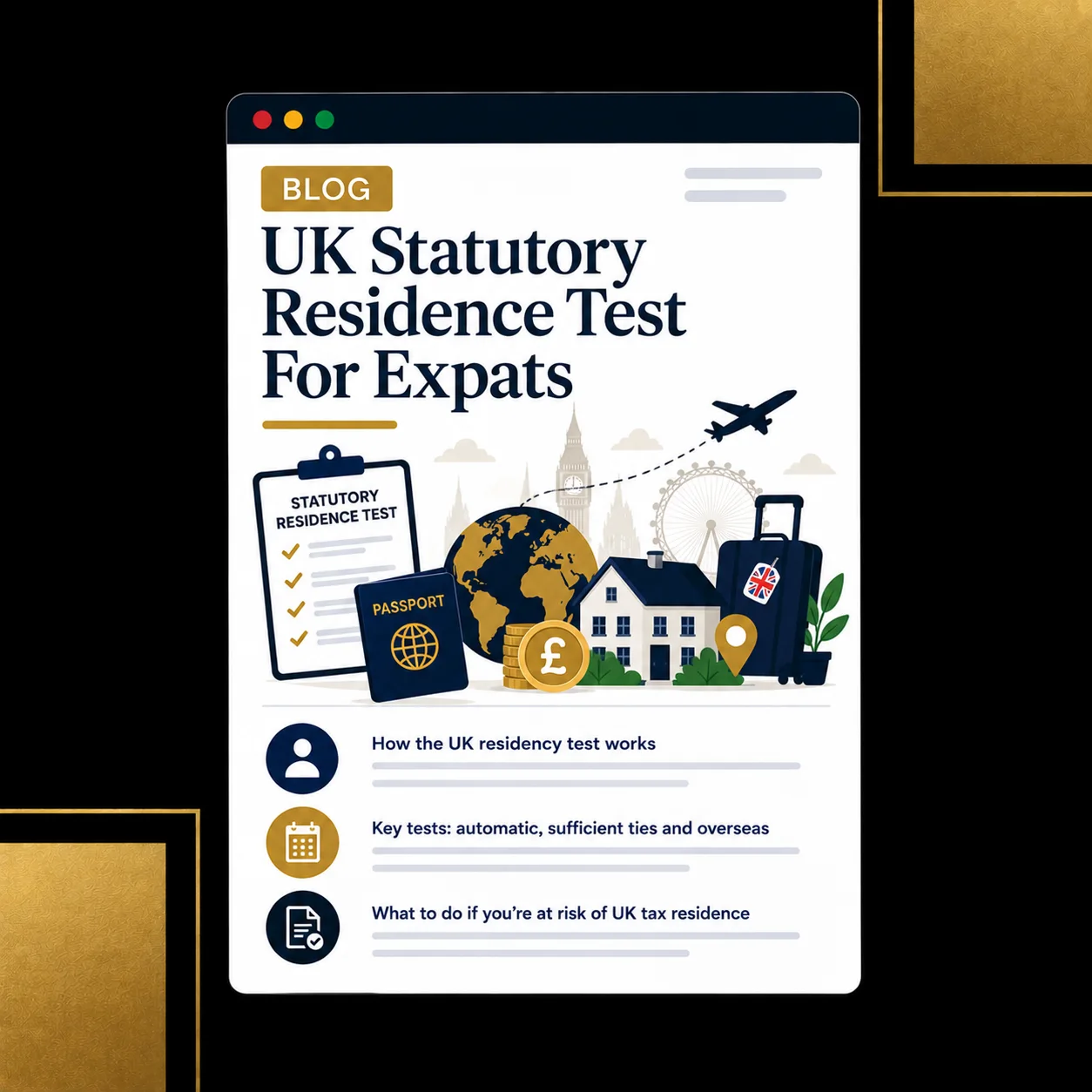

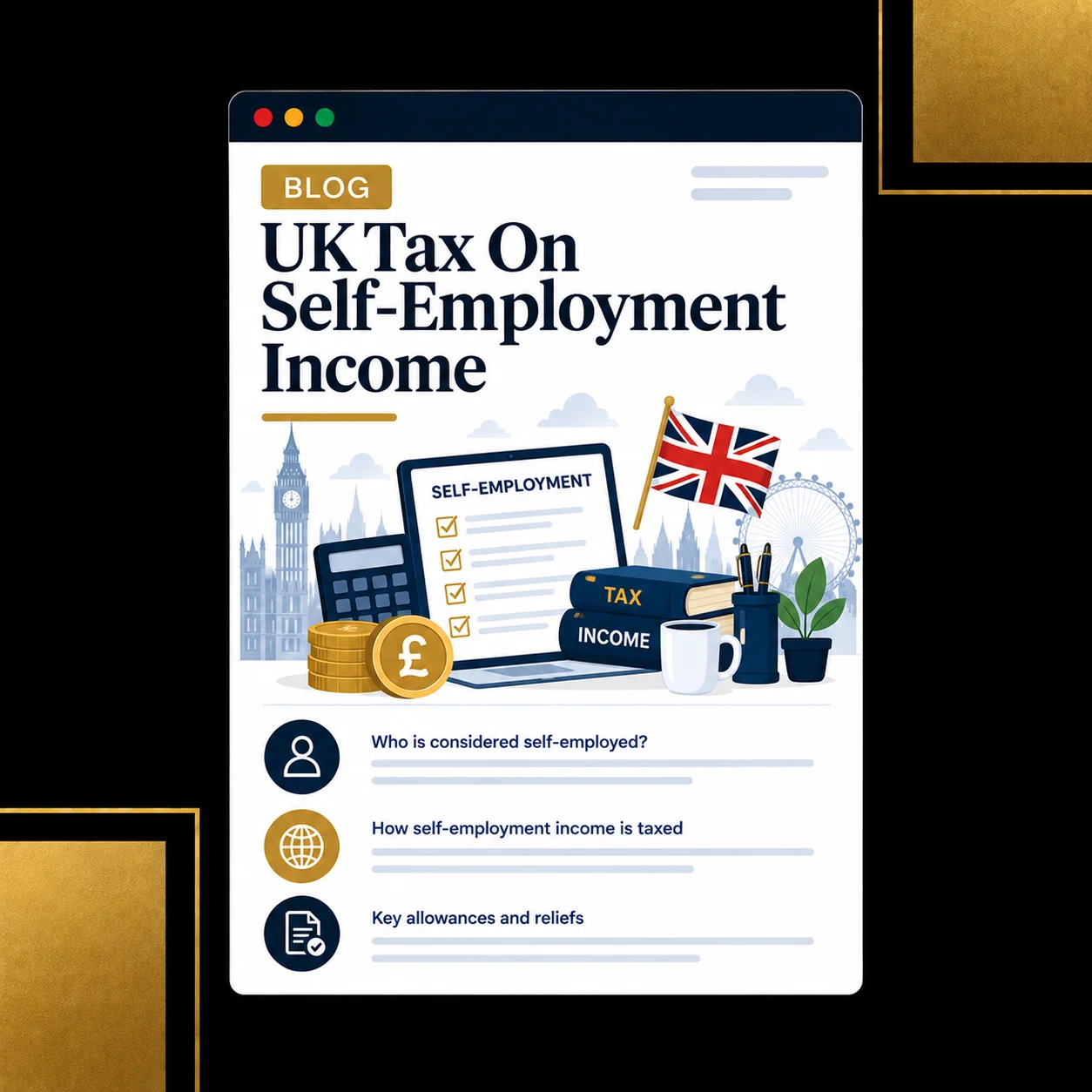
Digital nomads often work across borders, earn foreign income, and move frequently - which can create uncertainty around UK tax residency and reporting obligations. A UK tax residence assessment and, where relevant, a UK tax planning consultation help ensure you stay compliant, avoid double taxation, and optimise your tax position when working in or from the UK.
Your tax residency depends on several factors, including how many days you spend in the UK in a tax year, whether you have a home in the UK, and your ties to the UK, such as family or work commitments. This is worked out under the Statutory Residence Test. The UK tax year runs from 6 April to 5 April the following year, and residency can change from year to year depending on your circumstances.
If you are UK tax resident, you are normally taxed on worldwide income, including overseas employment, freelancing, dividends, and rental income - though double taxation relief can prevent the same income being taxed twice. If you are non-resident, you are typically taxed only on UK-sourced income. A UK tax residence assessment can help determine what must be declared.
If you are UK tax resident, employment and self-employment income is usually taxable in the UK irrespective of where the duties are performed. However, if you are UK non-resident and physically working outside of the UK, you are not typically taxable in the UK on this income regardless of the location of the client. The location of the client or bank account does not normally determine tax treatment, though remote work carried out while you're physically in the UK can still trigger UK tax and National Insurance.
Yes. Advance planning can help to avoid unintended UK tax residency, reduce exposure to double taxation, structure income efficiently, and remain compliant with HMRC. A UK tax planning consultation can cover all of this before you commit to a particular route. Early professional advice often saves both tax and penalties.
As British nationals often have recent ties to the UK and stronger connections here, it is more likely they will remain UK tax resident, or have a lower threshold of days they can spend in the UK before becoming non-resident. It is therefore important to understand your UK tax residence status as soon as possible, using the Statutory Residence Test, to ensure your income earned overseas is not unexpectedly taxable in the UK.
It depends on where you're resident, where your employer or business is based, and whether a social security agreement exists between the UK and the country you're working from. Even short spells of remote work carried out while you're physically in the UK can trigger National Insurance obligations, separately from your income tax position, so it's worth checking this alongside your residence status rather than assuming it follows the same rules.
If you're UK tax resident and freelancing or running your own business while travelling, you'll usually need to register for Self Assessment as self-employed, even if all of your clients are overseas. If you're non-resident, registration generally only applies where you have UK-sourced income to report. Our guide to UK tax on self-employment income covers what counts as reportable and when.
Once you stop paying UK National Insurance, your State Pension record stops building up, which can leave gaps if you're abroad for several years. You can usually pay voluntary Class 2 or Class 3 National Insurance contributions to fill these gaps, and it's worth checking your State Pension forecast before you leave so you know where you stand.
Earning under the personal allowance doesn't automatically mean you're exempt from filing. Whether you need to submit a return depends on the type of income you have, whether it's UK-sourced, and whether you're self-employed, rather than the amount alone. Our guide on who needs to file a UK tax return sets out the criteria in full.
A digital nomad visa is an immigration permission granted by your host country - it doesn't change how UK tax residence is worked out. Your position is still assessed under the Statutory Residence Test, based on UK day counts, ties and homes, and separately under the tax residence rules of the country issuing the visa. It's possible to hold a digital nomad visa and still be UK tax resident, so the two questions need to be looked at independently.
The Foreign Income and Gains regime, introduced from 6 April 2025, changed how newcomers to the UK are taxed on income and gains arising overseas. It's most relevant to nomads who become UK tax resident after spending time outside the UK, since it can offer relief on foreign income for a limited period. Whether it applies depends on your residence history in the years before arriving, so it's worth checking as part of a wider UK tax residence assessment.
Speak directly with a CTA-qualified expat tax specialist.
Book consultationSpeak directly with a CTA-qualified expat tax specialist.
✓ 10+ years experience
✓ CIOT examiner
✓ Award-winning CTA specialist